
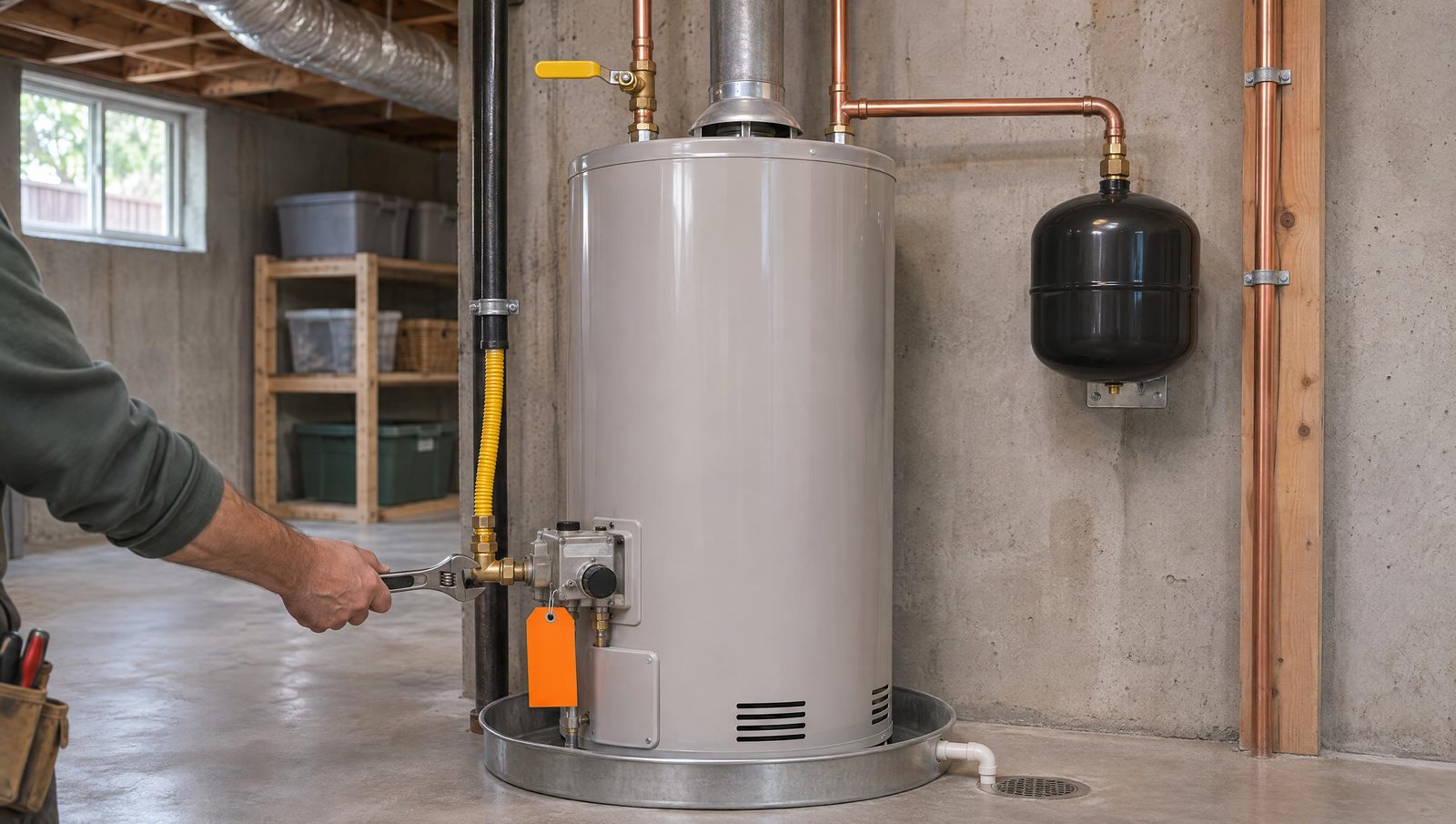
Water heater repair and replacement in Westfield, IN
If your water heater is leaking from the tank, it needs replacing; if it rumbles, runs out fast or the water smells, it can often be flushed or repaired. We tell you which, test your water hardness for free, and write the price before any work.
- Repair or replace, said plainly
- County permit pulled for you
- Hardness reading on the invoice
Tell us what the water heater is doing
We usually answer the same day, and the same hour for emergencies.
Water on the floor or a sewage backup? Call or text now: 317-555-0147
Water heater leaking or out? Do this first
Three things you can do before we get there. None of them need tools.
Shut the cold water valve above the heater.
It is on the pipe going into the top of the tank. Turn it clockwise until it stops.
Turn off the heat.
Gas: set the control knob to off or pilot. Electric: switch off the water heater breaker in the panel.
Call or text us with a photo of the label.
The label on the side gives the size and fuel, which tells us what to bring.
What the signs usually mean
Most water heater calls start with one of these. Here is what each one tends to point to in hard water country.
Rumbling or popping
Mineral scale on the bottom of the tank. A flush may clear it; years of build-up may not.
Hot water runs out fast
Scale taking up room in the tank, a failed lower element on an electric heater, or a broken dip tube.
Rusty or smelly hot water
A worn anode rod, the metal rod inside the tank that corrodes so the tank does not. It can be replaced.
Water under the tank
A fitting, the drain valve or the T&P valve, the safety valve on the side, can be fixed. The tank itself cannot.
No hot water at all
Gas: pilot, thermocouple or gas valve. Electric: a tripped breaker, a reset button or an element.
Water too hot or not hot enough
A thermostat setting or a failing thermostat. We set it safely and check the T&P valve while we are there.
Why hard water wears out water heaters here
Westfield water from Citizens Westfield runs about 12 to 20 grains per gallon, and Citizens does not remove hardness. Noblesville water from Indiana American Water ran roughly 22 to 27 grains in its 2025 report. When that water heats up, the minerals drop out and settle in the tank.
A grain per gallon is a measure of dissolved minerals, about 17.1 parts per million. Every heating cycle adds a little more scale, and the burner or element has to heat through it.
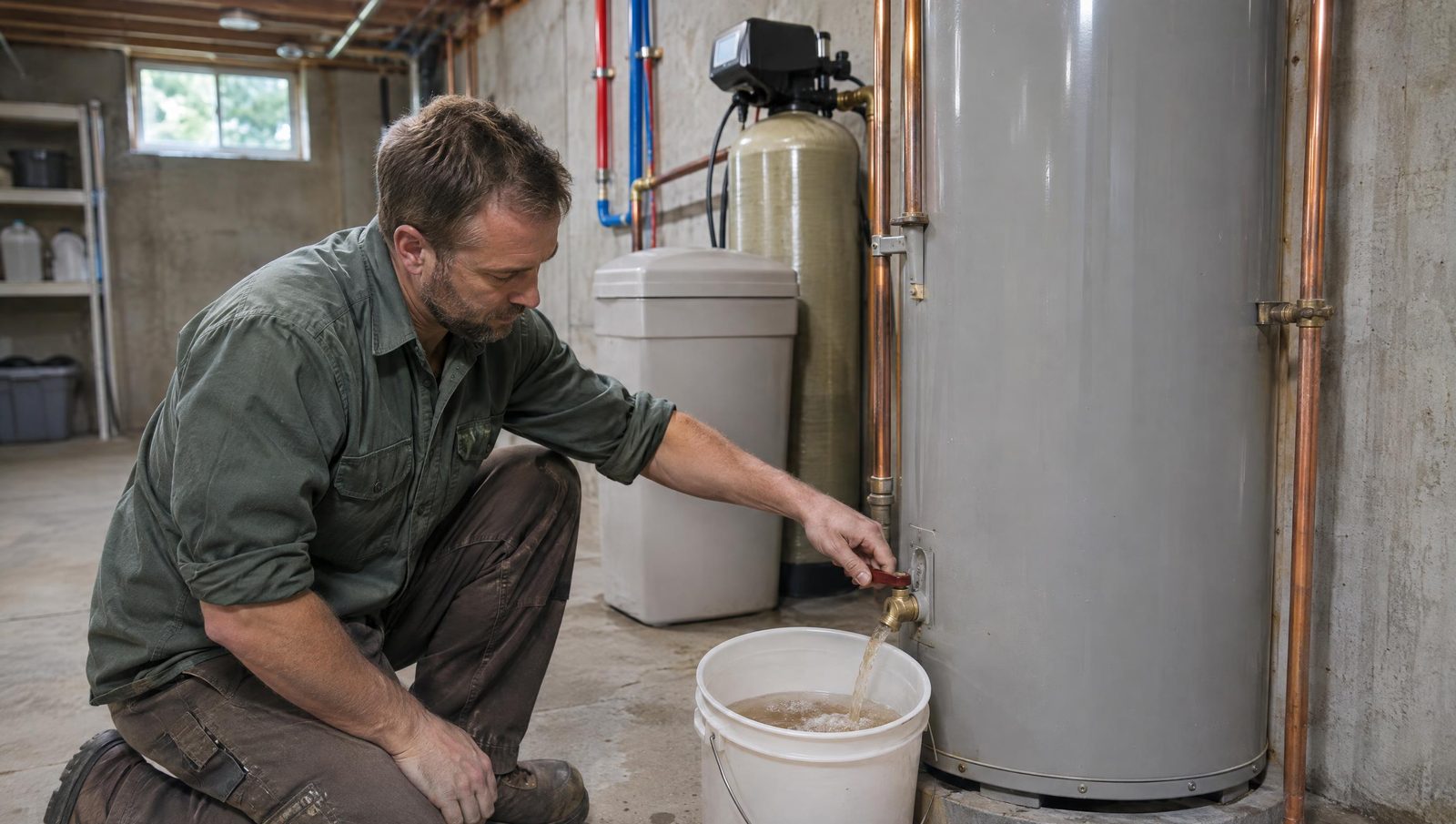
On every visit we test your water at the tap and write the number on your invoice, so you know what your heater is living with. A flush drains the loose sediment out through the drain valve; you see what comes out in the bucket.
“Our water heater had been rumbling for a year. Callum flushed it, showed us what came out, and told us straight that the tank was finished. The new one went in the next morning and he pulled the county permit and booked the inspection for us.”
Repair it, or replace it?
We look before we price. This is how the answer usually comes out.
| What we find | Usually | Why |
|---|---|---|
| Leak from a fitting, valve or supply line | Repair | The tank is sound; the part is not |
| Water coming from the tank body | Replace | Rusted steel cannot be patched |
| Failed element, thermostat or igniter | Repair | Parts are replaceable on most heaters |
| Heavy scale that a flush will not move | Talk it through | It can run, but it wastes energy and wears faster |
| Rusty hot water from a worn anode rod | Repair | A new anode protects the tank again |
| Repeated repairs on an older, scaled tank | Replace | Another repair often costs more over time |
When we replace it
We work from Westfield and cover Carmel, Noblesville, Fishers, Zionsville and Cicero. See every town on the areas we serve.
Sized to your house
Tank size, fuel and venting are matched to what you have and how many people use hot water. Tank or tankless, we explain the trade-off in plain words.
Permit and inspection
In Hamilton County every replacement needs a permit and an inspection. We pull it and book it. In Zionsville we follow the Town's process.
Done to code
Indiana's plumbing code is 675 IAC 16. That covers the T&P valve and its discharge pipe, the expansion tank where needed, and the drain pan.
Old heater hauled away
We drain it, carry it out and leave the space swept. You get a walk through the shutoffs on the new one.
You deal with Callum, and you see the price first

Callum Reid, owner and plumber
Callum answers the phone, tests the water and writes the price. You deal with him from the first call to the cleanup.
Book a water heater visit
We usually answer the same day, and the same hour for emergencies.
Water on the floor or a sewage backup? Call or text now: 317-555-0147
Water heater questions we hear most
Do I need a permit to replace a water heater in Hamilton County?
Yes. The Hamilton County Health Department requires a plumbing permit and an inspection for every new and replacement water heater, including one bought and installed through a hardware store. When we replace yours, we pull the permit and book the inspection. In Zionsville, which is in Boone County, the permit goes through the Town of Zionsville instead; see our Zionsville page.
How do I know if my water heater should be repaired or replaced?
Water coming from the tank itself means replacement; the steel has rusted through and cannot be patched. A failed thermostat, element, gas valve, igniter, thermocouple or a leaking fitting can usually be repaired. If the tank is older and scaled up badly, a repair may not be worth it, and we say so.
Why does my water heater rumble or pop?
Hard water leaves minerals in the tank. They settle as a crust on the bottom, water gets trapped under it, and it pops as it boils through. A flush often quiets it. If the crust has hardened for years, flushing may not move it, and the tank works harder every time it heats.
How often should a water heater be flushed here?
With the hardness most of Hamilton County gets, once a year is a sensible starting point, and more often in the hardest water. We look at what comes out of your drain valve and tell you whether your tank needs it more or less often. A water softener set to your reading slows the build-up a great deal.
Do you install tankless water heaters?
Yes. A tankless heater heats water as it flows, so it needs gas line, venting and sometimes electrical changes. Hard water scales its heat exchanger, so we test your hardness first and talk through descaling and softening before you decide.
What should I do if my water heater is leaking right now?
Turn off the cold water valve on the pipe above the heater. For a gas heater, turn the gas control to off or pilot; for an electric heater, switch off its breaker. Then call or text 317-555-0147. If you smell gas, leave the house and call the gas utility or 911 from outside. More on our emergency page.
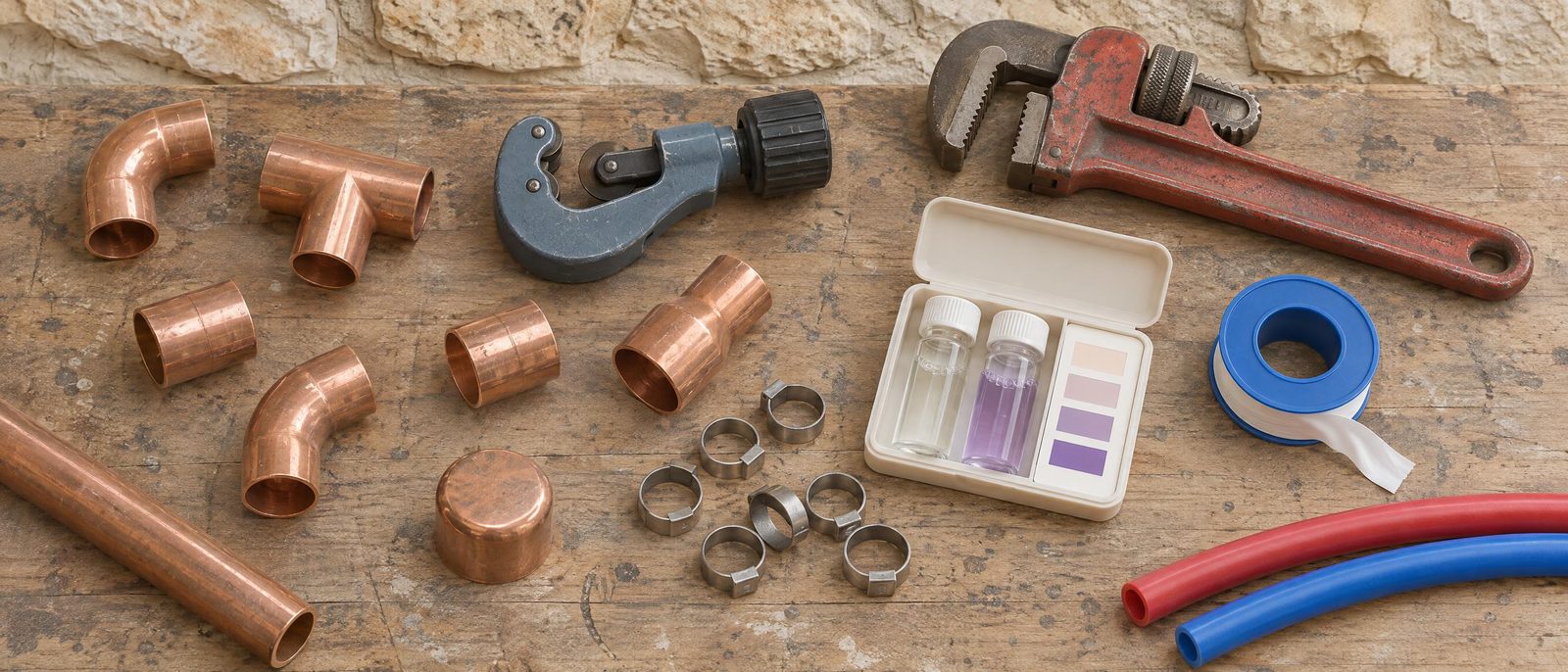
Water heater acting up? Start with what it is doing.
Tell us the size and fuel if you know it, and what you have noticed. Also see leak repair if the water is coming from a pipe rather than the heater.
Book a plumber with a free hardness test
We usually answer the same day, and the same hour for emergencies.
Water on the floor or a sewage backup? Call or text now: 317-555-0147